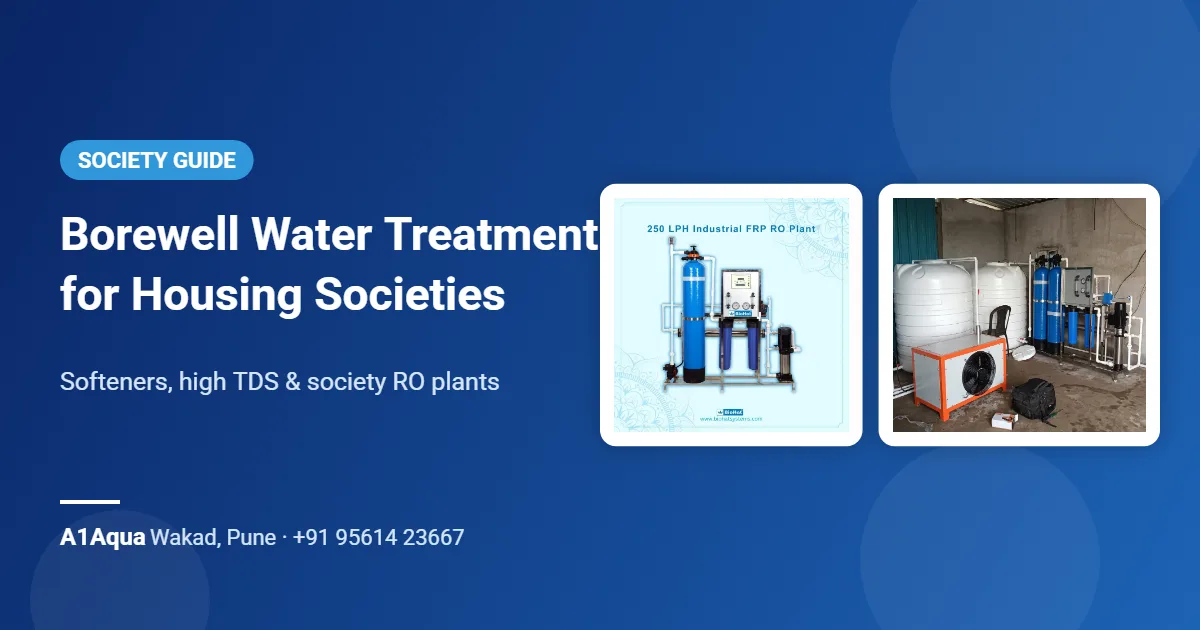
Quick answer: For a housing society in Pune on borewell or tanker water, the usual setup is a sand or multimedia filter for muddy water, an iron removal filter if there are brown stains, and a central water softener for hardness, all on the main supply line. Add a society RO plant (typically 100–250 LPH) for drinking water. A softener stops scaling but does not lower TDS, so high-TDS water needs RO for drinking. Every system is sized from a water test and the society's daily consumption.
In many newer societies around Pune, the complaints reach the managing committee in the same order. First white marks on bathroom tiles, then geysers failing, then residents buying cans because the tap water tastes salty. All of them usually come from one cause: borewell or tanker water that nobody has treated at the source. This guide is for society committees and facility managers deciding what to install.
What untreated borewell water does to a society
| What residents notice | Usual cause | What fixes it |
|---|---|---|
| White scale on taps, tiles, shower heads | Hardness (calcium and magnesium) | Central water softener |
| Geyser elements and washing machines failing early | Hardness scaling on heating elements | Central water softener |
| Yellow or brown stains, metallic taste | Iron | Iron removal filter |
| Muddy water after rains or a new tanker load | Turbidity and suspended solids | Sand or multimedia filter |
| Salty or heavy-tasting drinking water | High TDS (dissolved salts) | RO, for drinking water only |
| Smell from the overhead tank | Organic matter, a dirty tank | Tank cleaning, carbon filter, chlorination |
Start with a water test, not a quotation
We test hardness and TDS on site free of charge, and look for signs of iron and turbidity. If the society has more than one source, such as a borewell and tankers, test each one. Borewell readings in Pune often change between summer and the monsoon, so the system must handle the worst season, not the day of the test. For iron, bacteria or industrial contamination we recommend a full laboratory report before finalising the design.
The treatment chain for a housing society
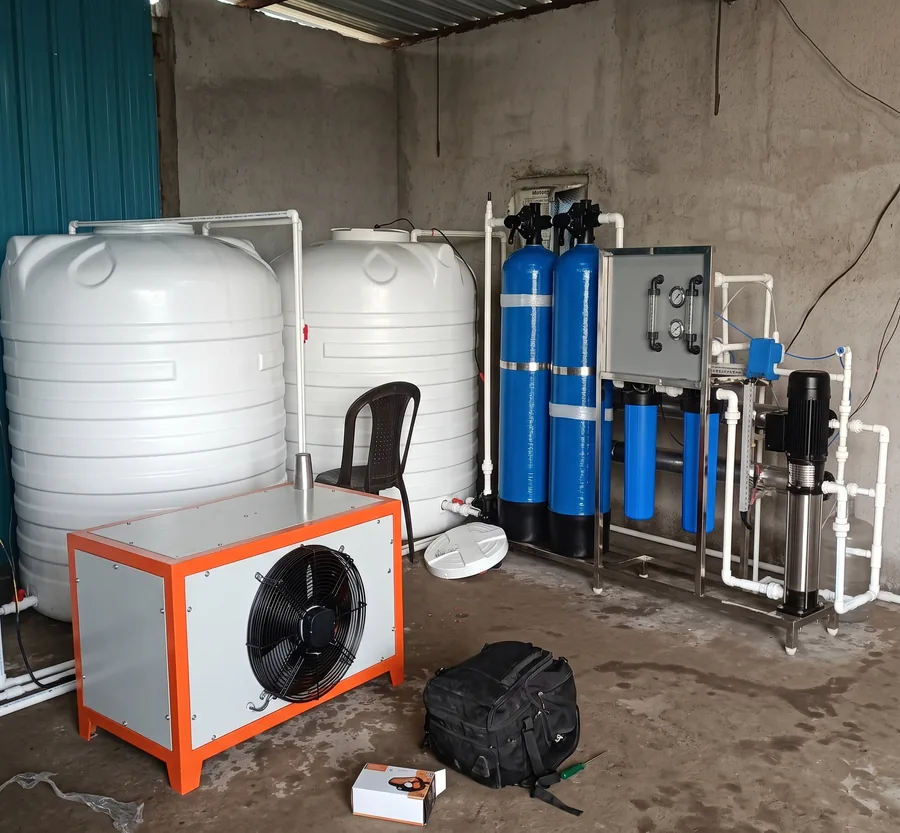
Treatment goes on the line that fills the society's tanks, so every flat gets treated water. The order matters:
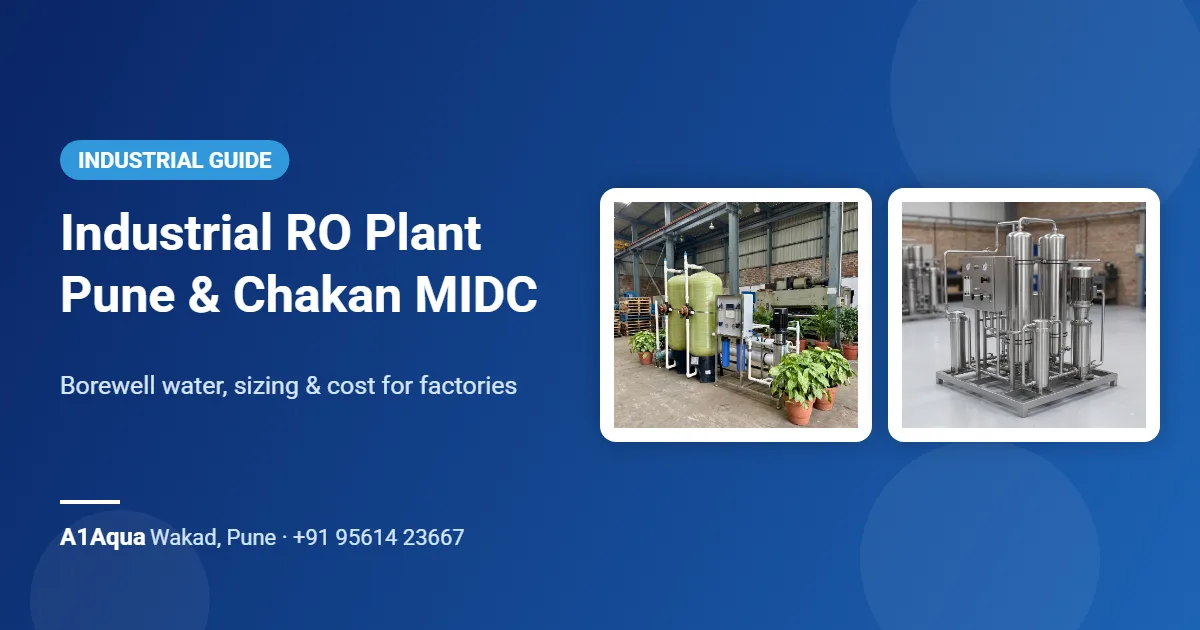
- Pressure sand or multimedia filter: removes silt and turbidity, and protects everything after it.
- Iron removal filter: only if the test shows iron.
- Activated carbon filter: optional, for odour, organics and chlorine from tanker or municipal water.
- Water softener: removes hardness, so tiles, fittings, geysers and appliances stop scaling.
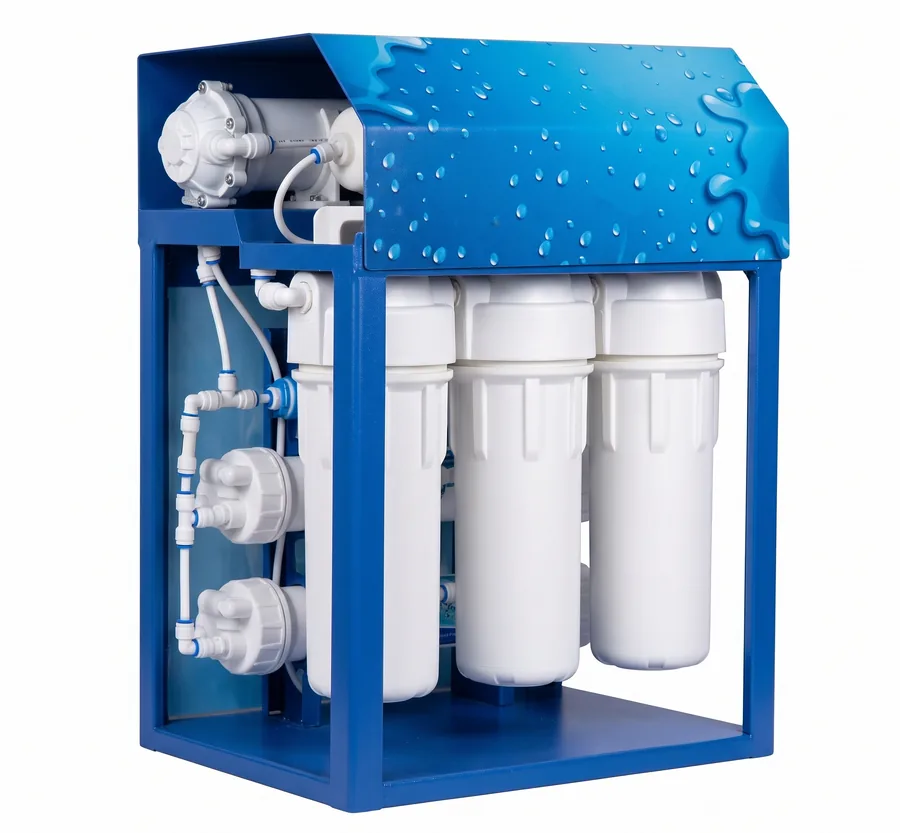
- Separate RO plant for drinking water: fed from the treated line and serving a common drinking-water point.
Each stage adds cost and maintenance, so we only include the ones your water test calls for. See our water treatment solutions and water softener systems for the equipment.
How a society water softener is sized
Softener sizing depends on two numbers: how much water the society uses each day and how hard it is. Together they decide the resin volume and how often the softener needs to regenerate with salt.
Estimating daily use: India's urban water-supply norm (CPHEEO) is 135 litres per person per day. A society of 100 flats with about 4 people each therefore uses roughly 54,000 litres a day. Add common areas, gardens and any swimming pool.
| Society | Approximate daily use | Typical approach |
|---|---|---|
| Small building, 20–30 flats | 10,000–16,000 L | One softener on the overhead-tank feed |
| Mid-size society, 80–150 flats | 45,000–80,000 L | Larger softener, sized to regenerate every few days |
| Large township, several towers | 1,00,000 L + | Twin or multiple softeners so one regenerates while another runs |
These are illustrative figures. The final size comes from your measured consumption and hardness. A softener sized too small regenerates so often that it wastes salt and water.
High TDS: why a softener alone is not enough
This is the most common misunderstanding we see. A softener swaps hardness minerals for sodium. Scaling stops, but the total dissolved solids stay almost the same, so salty-tasting water still tastes salty after softening. For high-TDS water:
- For bathing, washing and appliances: softened water is usually fine. TDS without hardness does not scale geysers.
- For drinking and cooking: you need RO, either a society RO plant at a common point or an RO purifier in each flat.
- RO for the whole society's supply is rarely practical, because a large share of the feed water becomes reject water.
Rule of thumb for committees: soften all the water, and RO-purify only the drinking water. That keeps both the capital cost and the water wasted to a sensible level.
A society RO plant for drinking water
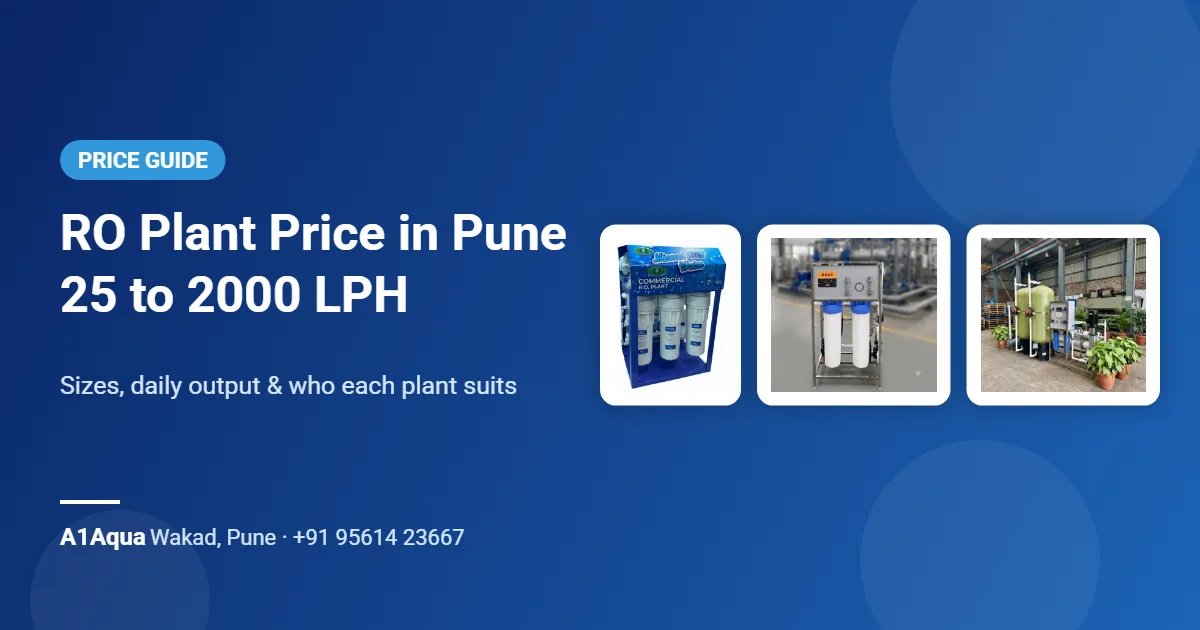
Many societies set up a common RO plant that fills a dispenser or a drinking-water tap at the clubhouse or each tower. Residents collect drinking water there instead of buying cans. If about 4 litres per flat per day are drawn, 100 flats need around 400 litres a day. A 50–80 LPH plant covers that in about 6–8 hours, and a 100–120 LPH plant leaves room to grow. Larger townships use 200–250 LPH. Prices and sizes are in our RO plant price guide for 25 to 2000 LPH.
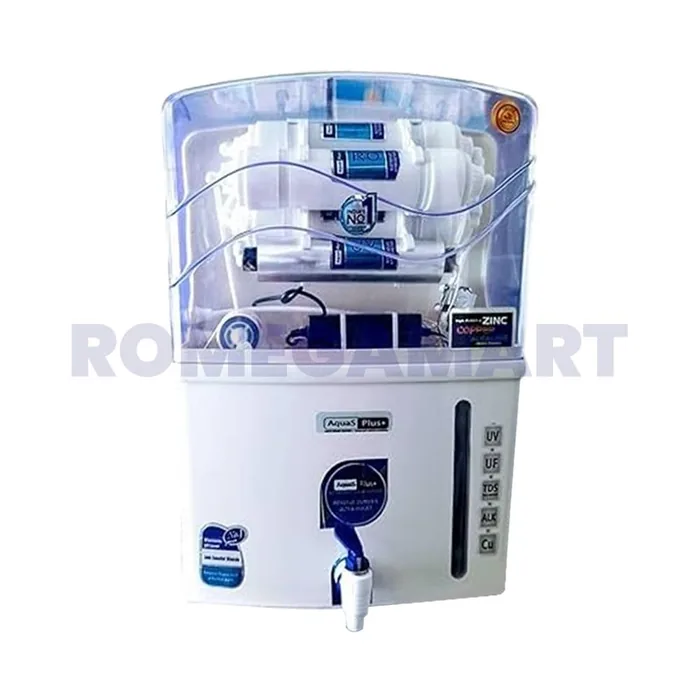
Flats that prefer their own purifier can use a domestic RO. See our domestic RO purifier buying guide.
Running and maintaining the system
| Task | How often | Who |
|---|---|---|
| Top up softener salt | As the brine tank level drops (weekly for busy systems) | Society staff |
| Backwash the sand and carbon filters | As set at commissioning, often weekly | Society staff, trained by us |
| Check hardness after the softener | Monthly | Society staff with a test kit, or our technician |
| Clean the overhead and underground tanks | Twice a year | Tank-cleaning agency |
| Service the softener, filters and RO plant | Every few months, by AMC | Service technician |
| Replace filter media and softener resin | When performance no longer recovers after service | Service technician |
An AMC keeps the whole chain on a schedule. It also gives the committee a service log to share with residents.
Societies we work with in Pune & PCMC
Hard and high-TDS borewell or tanker water is most common in the newer belts. In the west that means Wakad, Hinjewadi, Tathawade, Punawale, Ravet and Balewadi. In PCMC it is Moshi and Chikhali, in the east Wagholi and Kharadi, and in the south Undri and Kondhwa. We survey, design, install and maintain systems for societies across Pune and Pimpri-Chinchwad from our base in Wakad.
Book a free water test for your society
Tell us the society name, area, number of flats and water source. We test hardness and TDS on site and propose a treatment plan.
Frequently asked questions
Does a housing society need a water softener?
If the society's water leaves white scale on taps, tiles and geysers, it is hard, and a central softener on the main line protects every flat. We test hardness free on site before recommending one.
Will a water softener reduce TDS?
No. A softener removes hardness by exchanging calcium and magnesium for sodium, so TDS stays almost the same. For high-TDS water, use RO for drinking water, either a society RO plant or a purifier in each flat.
How is a society water softener sized?
From the society's daily water use and the hardness level. As a guide, the urban norm of 135 litres per person per day means a 100-flat society uses roughly 54,000 litres a day. The resin volume is chosen so the softener regenerates at a sensible interval.
What is the best treatment for borewell water in a Pune society?
Usually a sand or multimedia filter, an iron removal filter if needed, and a central softener on the main line, plus an RO plant for drinking water. The exact chain depends on the water test.
What size RO plant does a society need for drinking water?
At about 4 litres per flat per day, 100 flats need around 400 litres a day. A 50–80 LPH plant covers that, and a 100–120 LPH plant allows for growth. Large townships use 200–250 LPH.