
Parkhi Water ATM
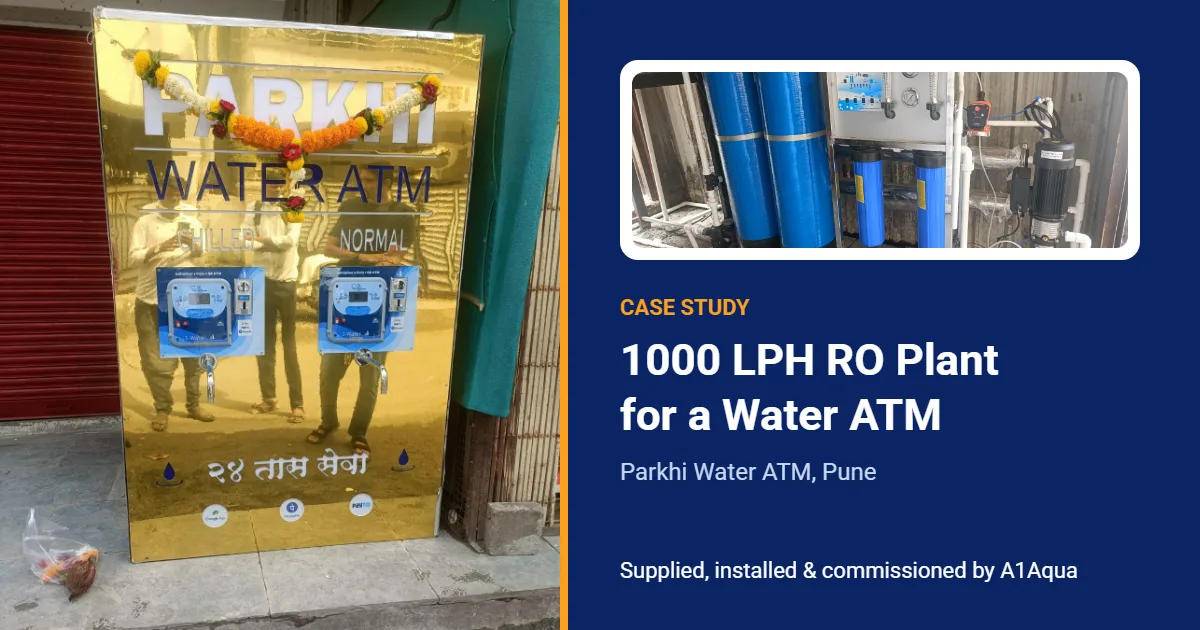
Owner: Prasad Parkhi. A self-service drinking-water ATM in Pune, selling chilled and normal RO water round the clock.
Client overview
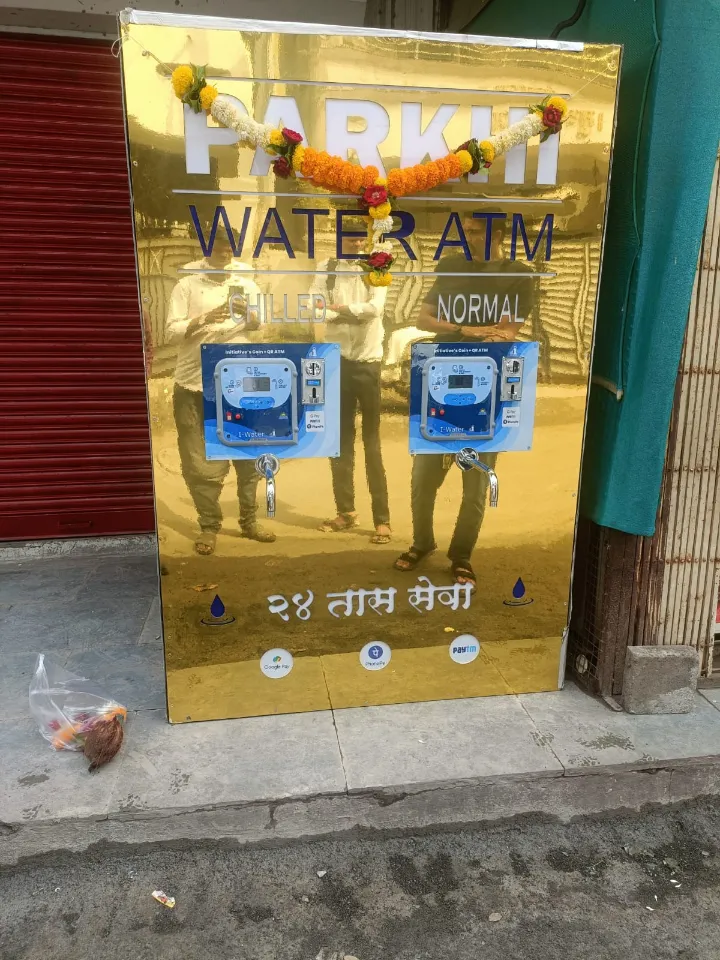
Prasad Parkhi runs Parkhi Water ATM, a roadside water vending point in Pune. Residents, shops and small businesses nearby walk up, choose chilled or normal water, and pay at the machine with coins or by scanning a UPI QR code (Google Pay, PhonePe or Paytm). The ATM front carries the promise “२४ तास सेवा”, which means 24-hour service. So the water behind it has to be purified, stored and ready at any hour.
The requirement
- Enough purified water for peak hours. Water ATM sales are uneven. Most jars are filled in the morning and evening, and demand climbs sharply in summer.
- Two kinds of water from one plant. The RO output had to feed both the chilled line and the normal line.
- Protection for the membranes. A plant that runs every day needs strong pre-treatment. Otherwise sediment and hardness cut output and shorten membrane life.
- Automatic, low-attention operation. The owner runs the business, not the plant, so it had to start and stop by itself and be easy to check.
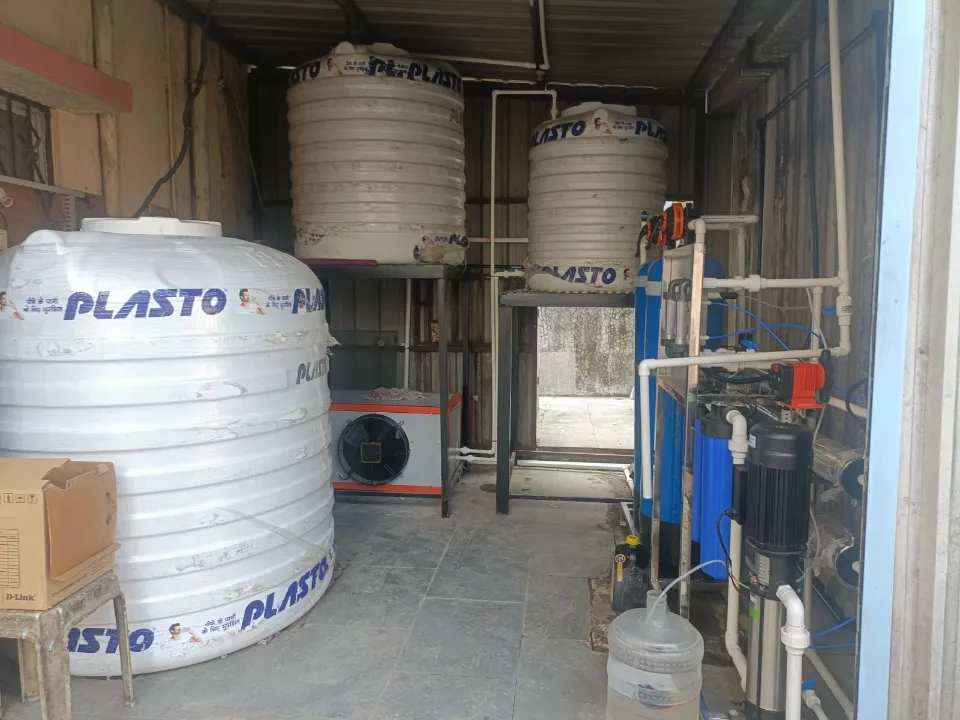
- A compact plant room behind the ATM front, shared with the storage tanks and the chiller.
Why a 1000 LPH plant suits a water ATM
A 1000 LPH commercial RO plant makes about 8,000 litres in an 8-hour run, the equivalent of roughly 400 twenty-litre jars. For a vending business, that speed matters more than the daily total. After a busy morning the plant refills the treated-water tanks in a short time, so the ATM is ready again for the evening rush.
| 500 LPH | About 4,000 L per 8 hours. It would need long running hours in summer and leaves little buffer after peak sales. |
|---|---|
| 1000 LPH (selected) | About 8,000 L per 8 hours. It refills storage quickly after peaks and leaves room for sales to grow. |
| 2000 LPH | Suits multiple vending points or bulk jar filling. More capacity, raw water and cost than one ATM needs. |
System design
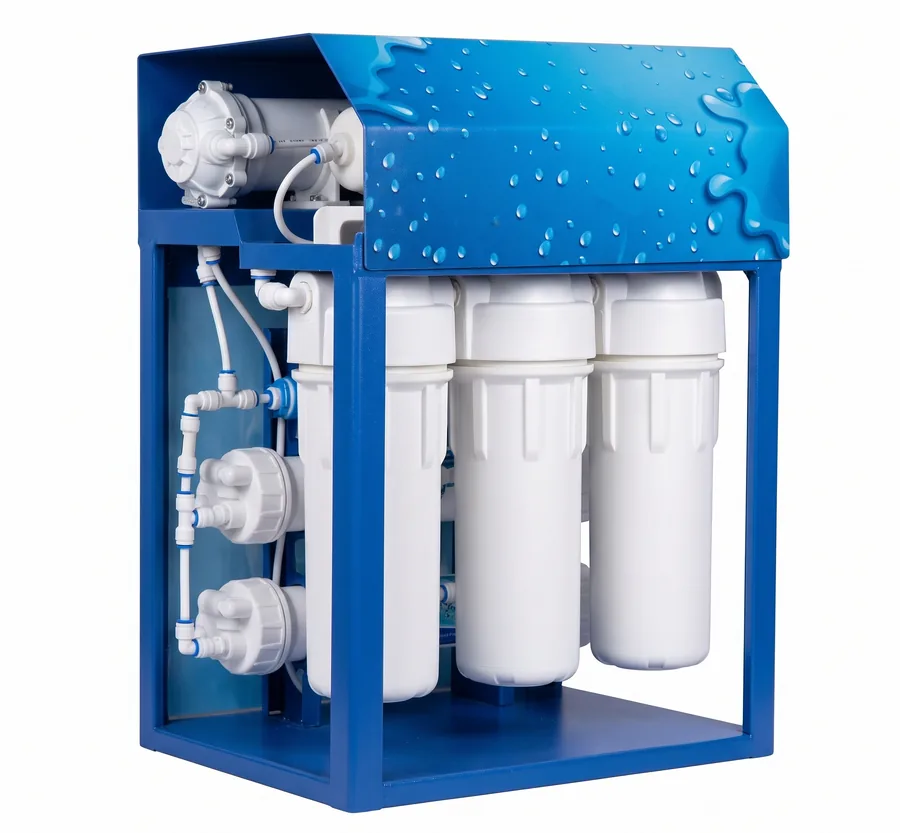
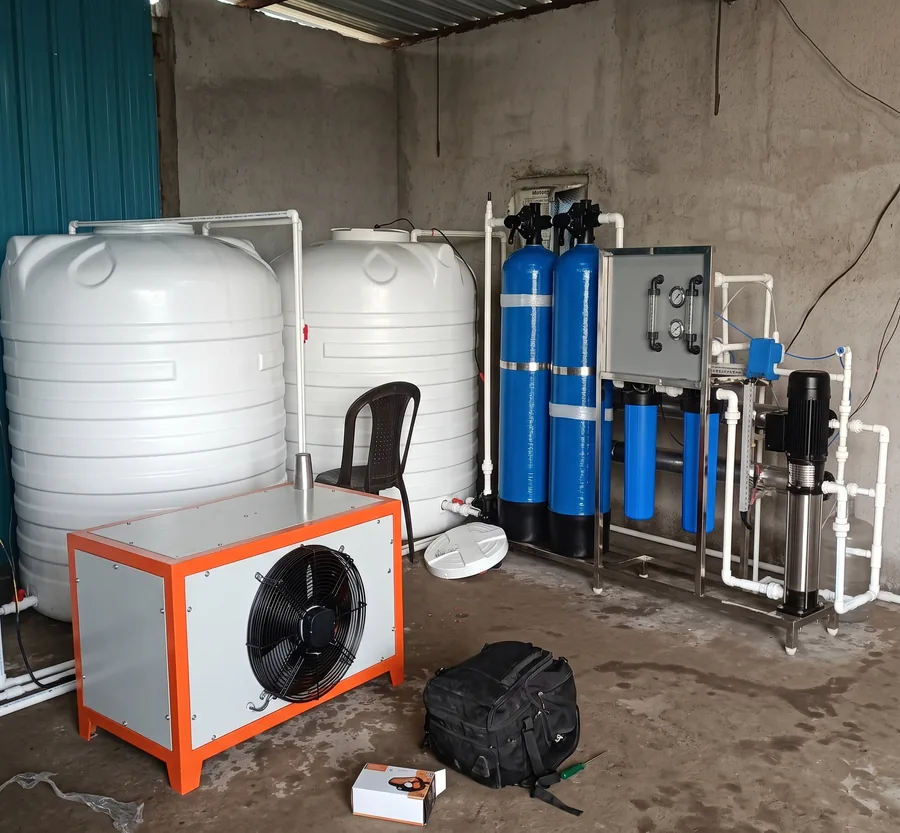
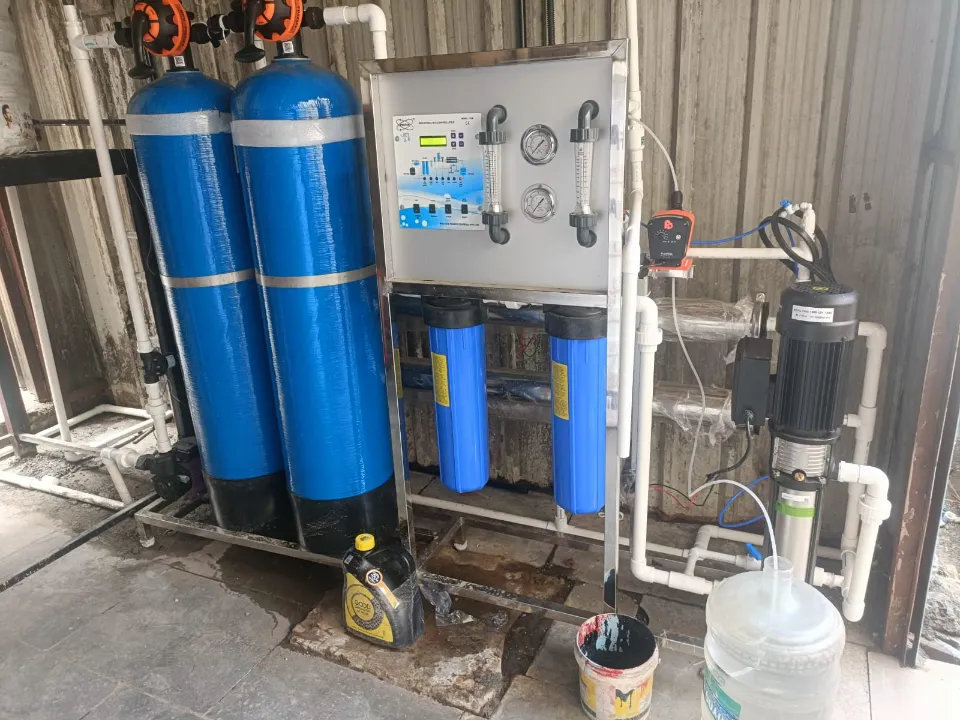
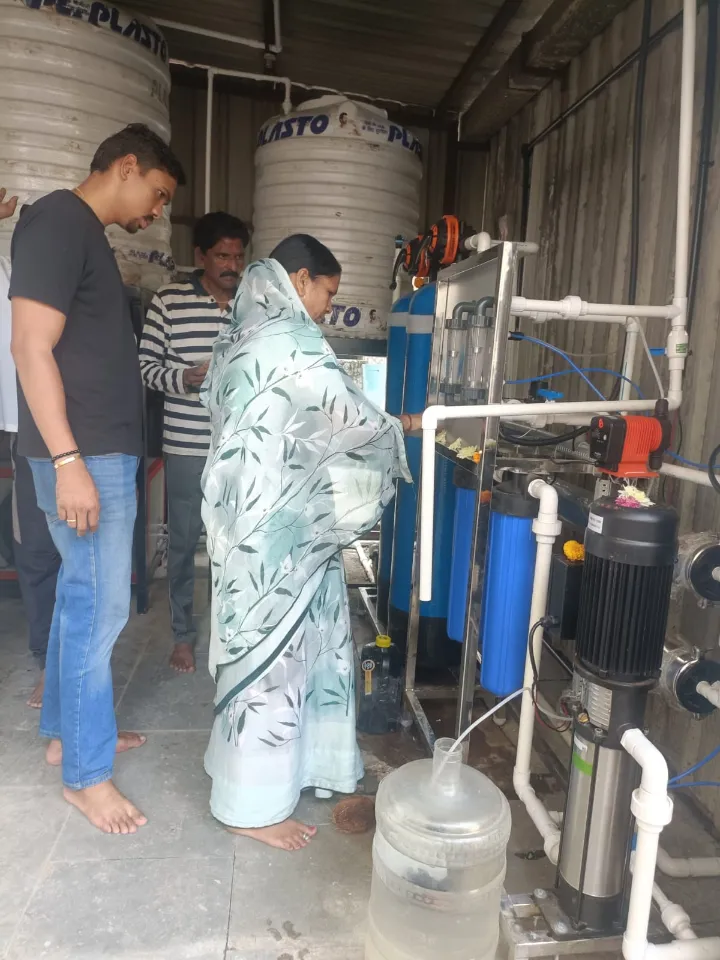
The plant is built on a stainless-steel skid, with the treatment stages in this order:
- Raw-water feed from the storage tank in the plant room.
- Twin FRP pressure vessels with automatic multiport valves, for sand and activated-carbon filtration. They take out silt, suspended solids, chlorine and odour.
- Antiscalant dosing pump, to stop hardness scaling the RO membranes.
- Two 20-inch jumbo cartridge filters as fine filtration, protecting the pump and membranes.
- Vertical multistage high-pressure pump feeding the RO membranes in stainless-steel housings.
- Industrial RO controller with an LCD display, two rotameters for product and reject flow, and two pressure gauges, so the plant runs automatically and any change in flow or pressure is visible at a glance.
Plant room layout
The RO skid runs along one wall of the plant room, with the storage tanks raised on steel stands and a water chiller between them. The layout follows the usual water ATM flow: raw water is stored, purified by the RO plant, held in treated-water tanks, and then sent to the dispensers either through the chiller (chilled outlet) or directly (normal outlet).
Commissioning and handover
The plant was commissioned in November 2026, with a puja at the plant and at the ATM to mark the opening. At commissioning our team checks the plumbing and electrical connections, sets the product and reject flow on the rotameters, calibrates antiscalant dosing and confirms the pressures. We then show the owner the daily checks: the gauges, the flow readings and the dosing tank level, and when to call us for service.
What the setup delivers
| Area | Outcome |
|---|---|
| Purified water | A 1000 LPH RO plant, about 8,000 L per 8-hour run, or roughly 400 twenty-litre jars |
| Products | Chilled and normal RO water from two dispensers on the ATM front |
| Availability | 24-hour self-service, paid by coin or UPI QR (Google Pay, PhonePe, Paytm) |
| Water protection | Sand and carbon filtration, antiscalant dosing and jumbo cartridges ahead of the membranes |
| Operation | Automatic controller, with flow and pressure visible on the panel |
Planning a water ATM?
A water ATM is a simple business on paper. In practice it depends on getting the water right every day. Before you invest, plan for:
- Location and footfall: markets, bus stops, labour colonies and dense housing areas sell the most water.
- Raw-water source and a water test: borewell, tanker or municipal water each need different pre-treatment.
- Plant size: size it from your expected peak sales, not the daily average. See our RO plant price guide from 25 to 2000 LPH.
- Storage, chiller and dispensers: treated-water storage that covers your peak, plus a chiller if you sell chilled water.
- Service: a vending plant runs every day, so cartridges and membranes need a fixed schedule. Read what a good commercial RO plant AMC covers.
- Permissions: check the local municipal and food-safety requirements for selling drinking water.
As a commercial RO plant supplier in Pune, we start every project with a free site visit and water test. For another example, see our 250 LPH RO plant case study for IIEBM Indus Business School.
Frequently asked questions
How much water does a 1000 LPH water ATM plant produce?
About 1,000 litres per hour at rated conditions, so roughly 8,000 litres in an 8-hour run, enough to fill about 400 twenty-litre jars. Real output depends on raw-water TDS, temperature and how well the pre-filters are maintained.
What do I need to start a water ATM in Pune?
A location with steady footfall, a reliable raw-water source with a water test, a small plant room with power and a drain, storage tanks, an RO plant sized to your sales, a chiller if you sell chilled water, and dispensers with coin or UPI payment. Check the local municipal and food-safety requirements before you start.
Why does a water ATM need a large RO plant if it dispenses slowly?
Sales come in peaks, mostly mornings, evenings and summer. A larger plant refills the treated-water tanks quickly after each peak, so the ATM does not run dry, and it does not have to run all day to keep up.
What does a 1000 LPH RO plant cost?
A1Aqua lists its standard 1000 LPH commercial RO plant at ₹1,20,000. Storage tanks, a chiller, dispensers and site work for a water ATM are quoted separately after a free site visit and water test.
How often should a water ATM RO plant be serviced?
A plant that runs every day usually needs its jumbo cartridges changed every 1–3 months, with regular checks on dosing, the FRP filters, flow and TDS. The membranes are cleaned or replaced when output drops. An AMC plan covers this.