

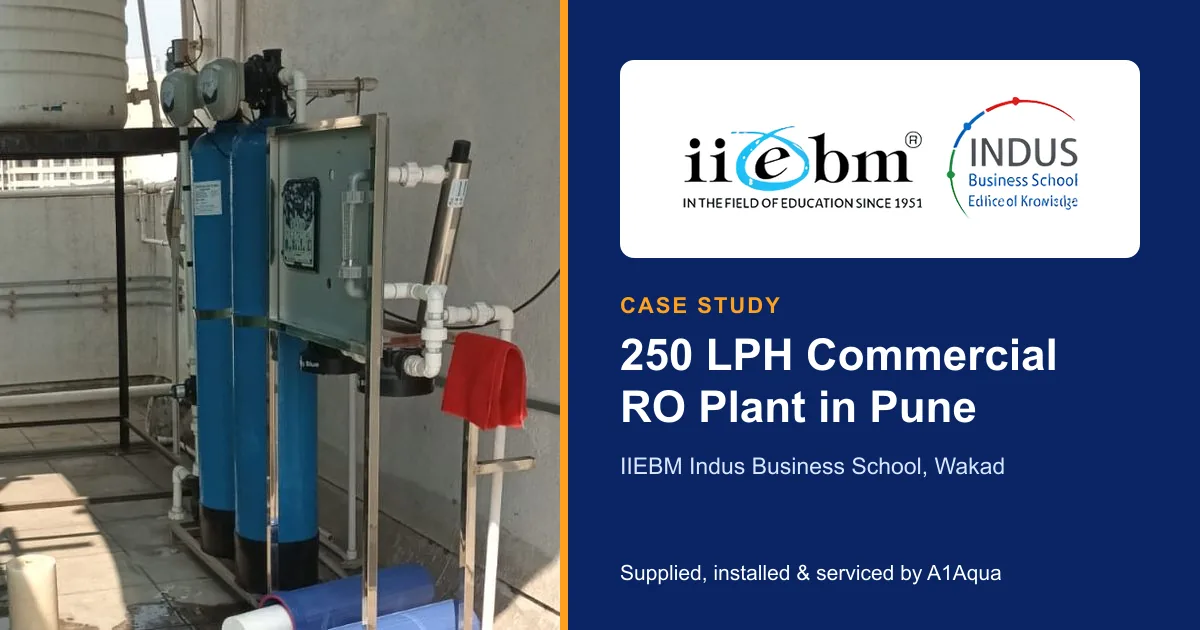

IIEBM Indus Business School
Management institute in Wakad, Pune. IIEBM has worked in the field of education since 1951.
Client overview
IIEBM Indus Business School runs its management programmes from its campus in Wakad, Pune. Students, faculty and administrative staff are on campus every working day, so the institute needs a dependable supply of safe drinking water for classrooms, offices and the cafeteria. The Administration department wanted that water produced on site, from the campus's own storage, instead of depending on outside suppliers.
The requirement
- Daily drinking water for the whole campus, with enough headroom for busy days such as exams, admissions and events.
- Use the existing rooftop storage. Raw water is already stored in an overhead tank on the terrace, so the plant had to sit beside it.
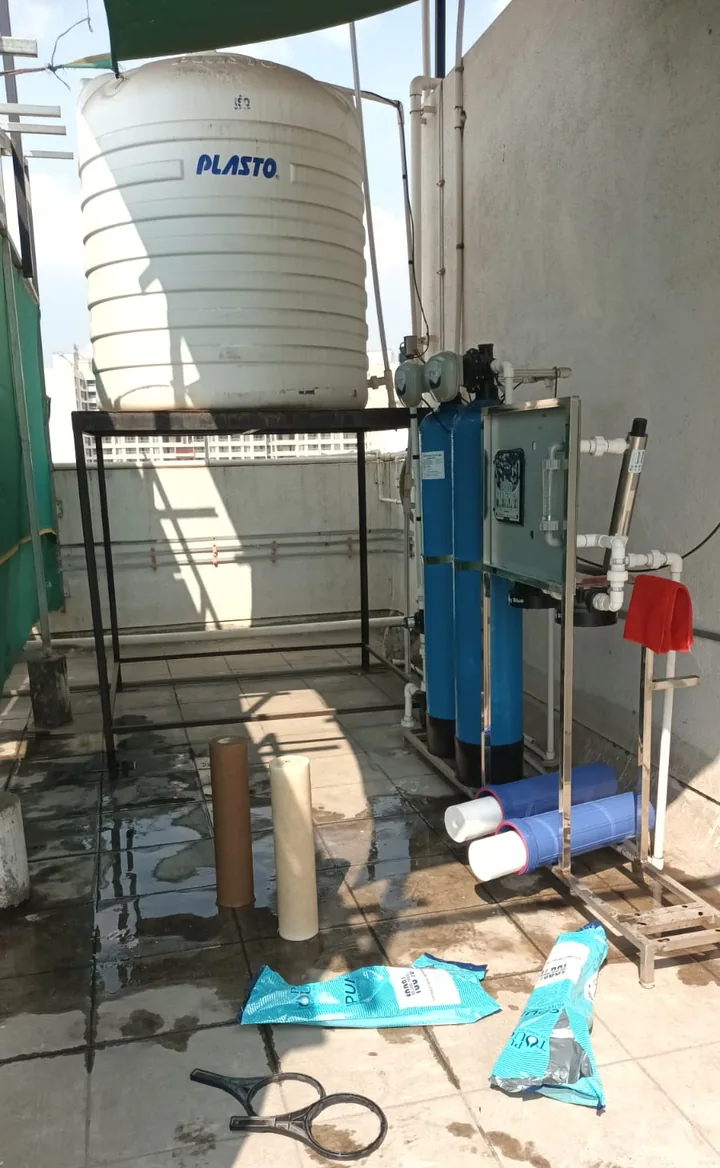
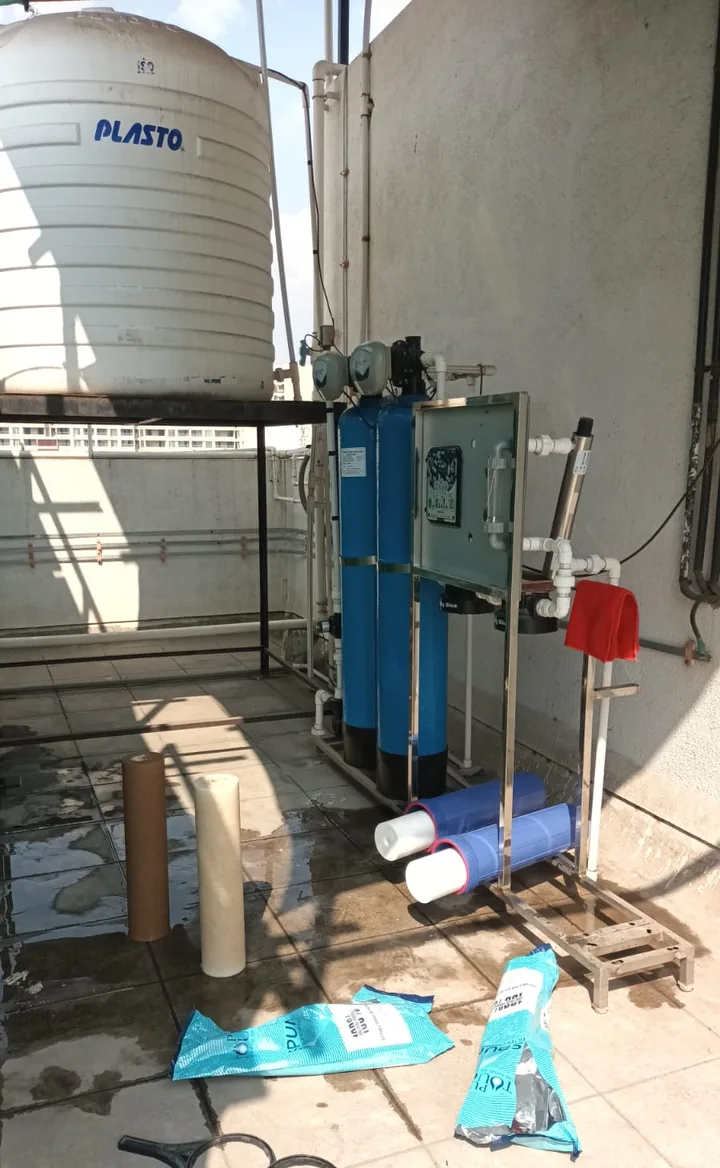
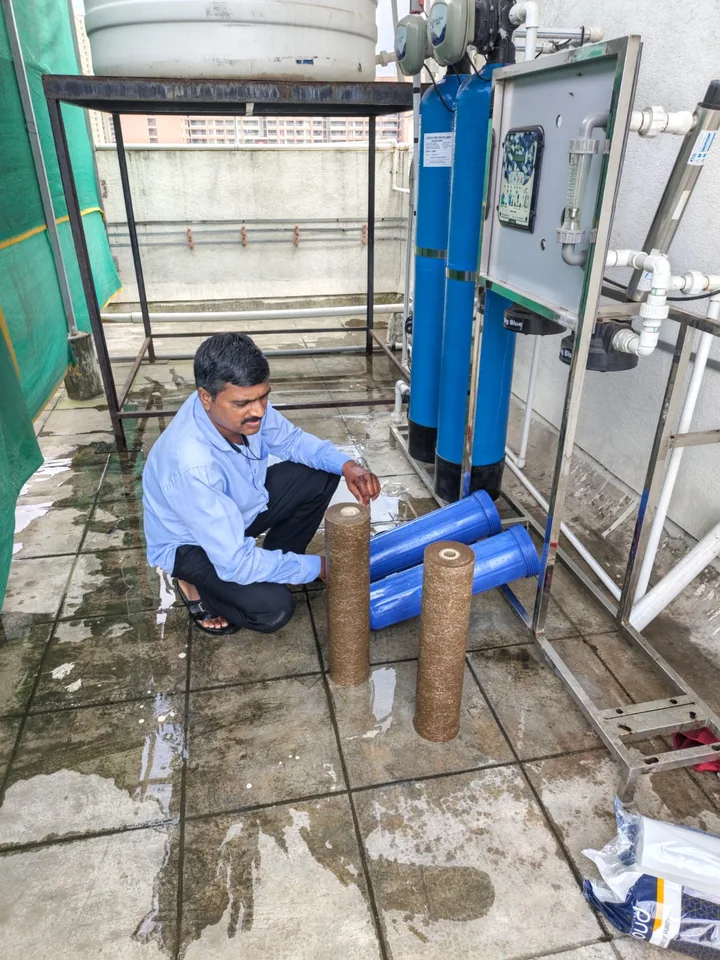
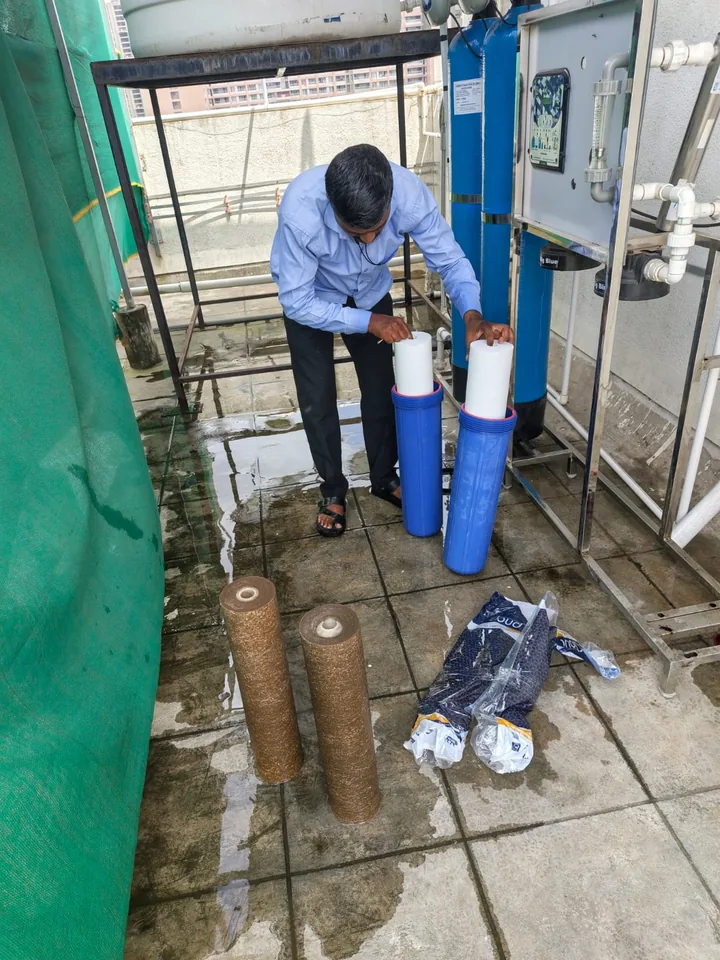
- A high sediment load. As the photos below show, the used pre-filter cartridges come out dark brown. The feed water carries suspended solids that would quickly damage an unprotected membrane.
- Little attention needed. The plant had to run automatically and be easy for the campus team to check.
Why we recommended 250 LPH
A 250 LPH commercial RO plant produces about 2,000 litres of purified water in an 8-hour run. That covers the drinking water a campus like this uses, with spare capacity for peak days, without needing round-the-clock running.
| 150–200 LPH | Would run close to its limit on busy days, wearing the membrane faster. |
|---|---|
| 250 LPH (selected) | Right output with headroom. Compact enough for the terrace and lower running cost. |
| 500 LPH | More capacity than the campus needs. Higher purchase price and more idle time. |
System design
Because of the sediment load, we gave this plant stronger pre-treatment than a basic 250 LPH unit:
- Feed from the rooftop overhead tank already on the terrace.
- FRP sand (multimedia) filter with an automatic valve, to take out silt and suspended solids.
- FRP activated-carbon filter with an automatic valve, to remove chlorine, odour and organics.
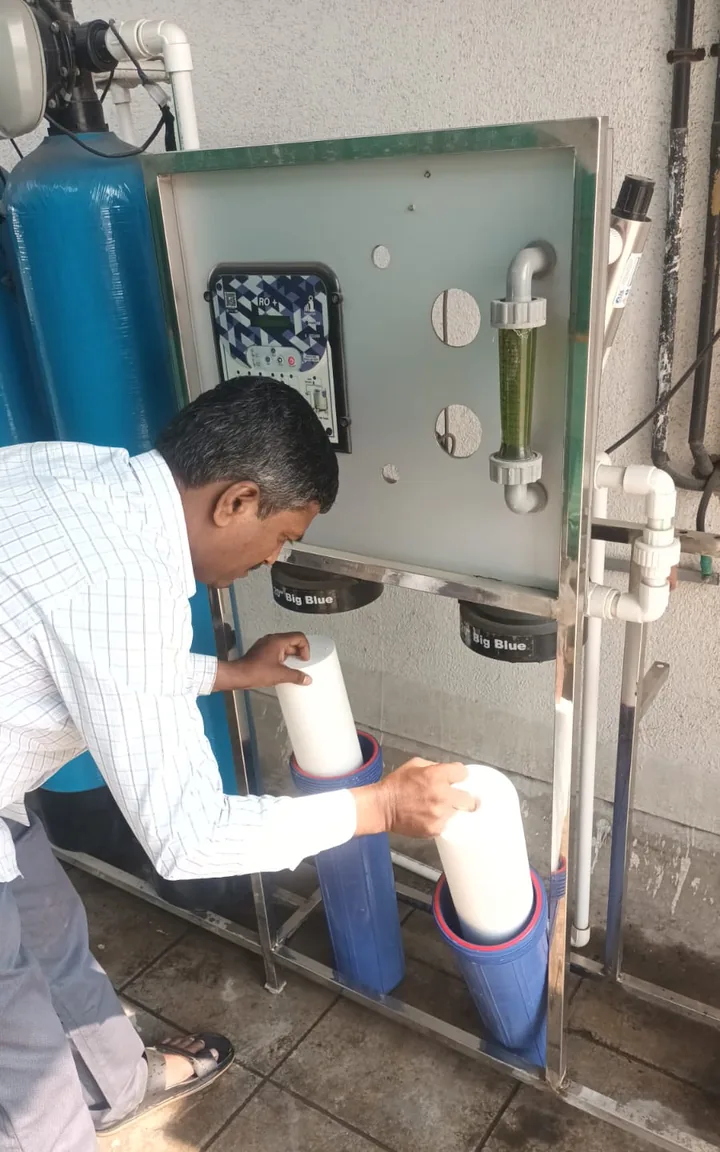
- Two 20-inch “Big Blue” jumbo cartridge filters as fine filtration, protecting the pump and membrane.
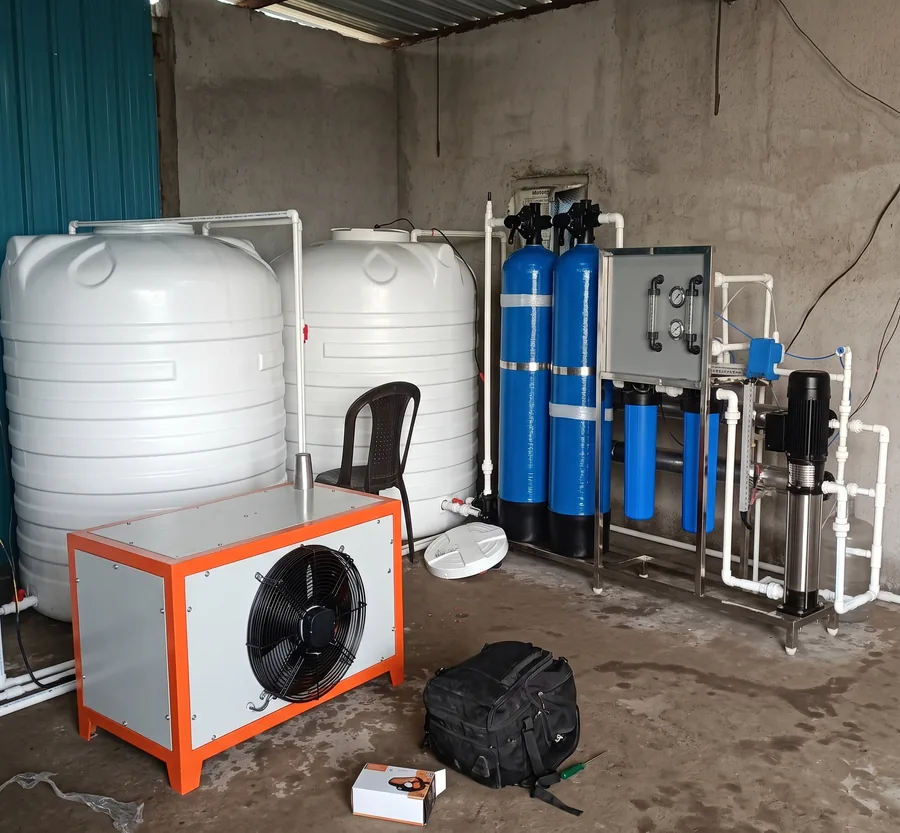
- High-pressure pump and 4040 RO membrane to reduce TDS and dissolved impurities.
- Stainless-steel UV sterilizer on the product line, as a final disinfection barrier.
- Digital RO controller and rotameter on a stainless-steel frame, for automatic operation and a visible check on flow.
Installation on the terrace
We mounted the whole system on the terrace beside the overhead tank, on a stainless-steel skid with the twin FRP vessels alongside. This kept indoor floor space free and kept the raw-water line short. The controller handles start, stop and tank-level switching, so the plant runs without an operator.
Service and maintenance
The plant is looked after by A1Aqua under a service and AMC plan. On our service visits, including those on 3 December 2025 and 14 January 2026, the team replaced the jumbo pre-filter cartridges, checked the FRP filters and confirmed product-water flow on the rotameter.
The removed cartridges show why this matters. They come out dark brown with trapped sediment. If they were left in place, the load would pass on to the RO membrane, cut output and shorten membrane life. Changing them on schedule keeps the 250 LPH output steady and protects the most expensive part of the plant.
Results
| Area | Outcome |
|---|---|
| Drinking water | Purified on site by a 250 LPH RO plant, about 2,000 L per 8-hour run |
| Water safety | Five treatment stages, with UV as the final disinfection barrier |
| Space | Fits on the terrace beside the existing tank. No indoor floor space used |
| Operation | Automatic controller and tank-level switching. Runs without an operator |
| Upkeep | Scheduled A1Aqua service visits with pre-filter replacement to protect the membrane |
Planning a similar project?
Schools, colleges, offices and hostels that need around 1,500–2,500 litres of drinking water a day are usually well served by a 250 LPH commercial RO plant in Pune. For larger campuses, compare the 500 LPH and 1000 LPH plants, or read our 250 LPH buyer's guide. As a commercial RO plant supplier in Pune, we start every project with a free site visit and water test.
Frequently asked questions
How much water does a 250 LPH RO plant produce in a day?
About 250 litres per hour, so roughly 2,000 litres in an 8-hour run. Actual output depends on feed-water TDS, temperature and how well the pre-filters are maintained.
Can a commercial RO plant be installed on a terrace?
Yes. At IIEBM Indus Business School the whole system sits on the terrace beside the overhead tank. We check the floor, power point and drain line during the site visit.
Why do pre-filter cartridges turn brown?
They trap sediment, rust and suspended solids from the feed water. Brown cartridges are working as intended, but they must be replaced on schedule or the load reaches the RO membrane.
How often should a 250 LPH RO plant be serviced?
Most sites need a service visit every 1–3 months, depending on water quality and usage. Cartridges are changed as needed, and the membrane is cleaned or replaced when output drops. An AMC plan covers this.